Breaking News
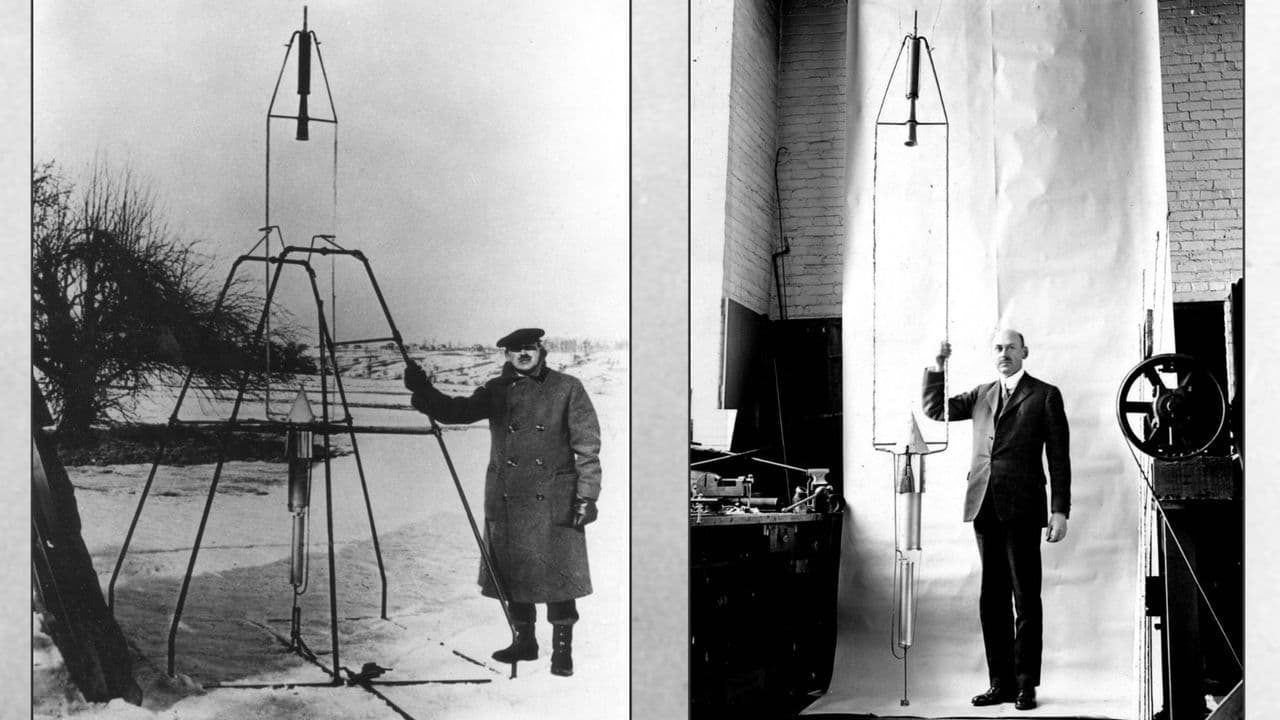
Before humanity sent satellites, telescopes, humans and weapons into space, Robert Goddard experimented with the first liquid-fueled rocket on his aunt’s farm.
Executives from 4D Molecular Therapeutics (NASDAQ:FDMT) outlined the company’s gene therapy platform, clinical progress, and commercialization plans during a Barclays analyst discussion in Miami, highlighting its lead retinal program 4D-150 and an earlier-stage effort in cystic fibrosis. Company overview and platform Chief Financial Officer August Moretti described 4D Molecular Therapeutics as a “next-generation gene therapy [...]
Loading... •
The longtime Atlanta housing hack—drive farther, pay less—may be about to disappear. New data show homes in the region's far-flung exurbs are now selling for a median $380,962, just about $4,000 under prices in the city core and its suburbs. That discount was roughly $51,000...
The Royal Astronomical Society (RAS) is alarmed by the threat to ground-based astronomy posed by proposals put forward by Elon Musk's SpaceX and Reflect Orbital. SpaceX has applied to launch one million satellites to act as data centers to power artificial intelligence, but brightness estimates show that thousands would be visible to the naked eye, many more than visible stars. On average, each image with the European Southern Observatory's Very Large Telescope would lose 10% of data due to satellite trails.
From emergency oil reserves to nuclear scrutiny, bigger hail, and research on a connection between the aging gut and the brain
Robert Goddard's innovations in liquid-fueled rockets — assisted by his wife, Esther — still resonate 100 years after his pioneering flight.
Per- and polyfluoroalkyl substances were a major topic at the Pittcon instrumentation and analytical science conference
The biosphere transmits data 9 orders of magnitude faster than the technosphere. A new class of nanophotonic tools is beginning to close that gap.In this webinar, Prof. Dionne will present VINPix: Si-photonic resonators with high-Q factors (thousands to millions), subwavelength mode volumes, and densities exceeding 10M/cm2. Combined with acoustic bioprinting and AI, they may enable detection of multiomic signatures — genes, proteins, and metabolites on a single chip — at previously unattainable rates, opening new possibilities for molecular communication systems and biochemical sensing for health and sustainability.Key Takeaway: Single-chip multiomics — VINPix arrays plus AI for simultaneous gene, protein, and metabolite detectionField-deployed biosensing — integrated with Monterey Bay Aquarium Research Institute (MBARI) autonomous underwater robots for ocean biochemical monitoringPeptide & glyco-conjugate sequencing — major histocompatibility complex (MHC)-tethered peptides, dynamic Raman spectroscopy, and computational metadynamics to identify previously unseen molecular speciesTumor microenvironment profiling — subcellular prediction of drug resistance, macrophage polarization, and T-cell activation statesRegister now for this free webinar!
Using data from the Magellan Clay telescope and the Canada-France-Hawaii Telescope (CFHT), astronomers have investigated a galactic globular cluster known as NGC 5824. Results of the new study, available in a paper published March 5 on the arXiv pre-print server, suggest that the cluster is embedded in a dark matter halo.
Two members of Cornell’s on-campus business incubators will soon expand their businesses in Ithaca, creating local jobs and building capacity for future startups to grow in the region.